Cookie settings: We use cookies to analyze site traffic and optimize your experience. Read our Privacy Policy for details.
Plastic Injection Moulding & Polymer Production
Maximize Tonnage Uptime: Visual Moulding Scheduler
Streamline mould tool changeovers, masterbatch color sequences, and 24/7 press queues. Synctile brings real-time shop floor clarity to injection moulding bays without bloated ERP software.
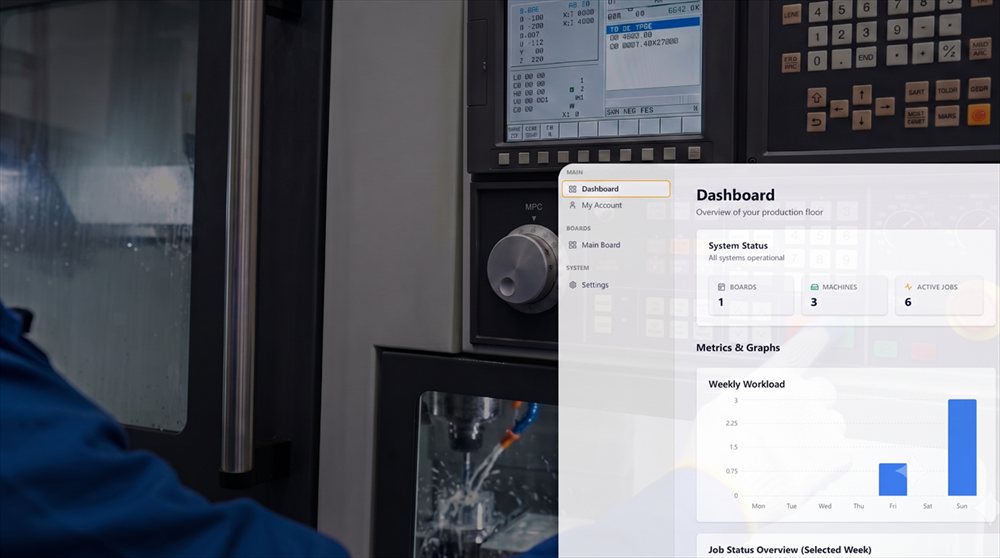
Live press floor coordination: Balance tonnage capacity across 50T to 500T moulding presses and secondary assembly cells.
Engineered for High-Volume Polymer Production
Keep presses cycling continuously while slashing mould changeover downtime and resin purge waste.
Tool & Colour Transition Sequencing
Sequence production to transition logically from light to dark masterbatch pigments and group family mould tools. Minimize barrel purges and die hanging downtime.
SMED Purge Reduction
24/7 Shift Handover Alignment
Eliminate communication breakdowns between Day, Twilight, and Night shifts. Oncoming setters see active shot counters, tool heatup status, and hopper resin levels instantly.
Continuous 24/7 Sync
Overhead Press Bay TV Monitors
Broadcast live machine columns on large screens mounted above hydraulic and electric presses so material handlers, setters, and QA inspectors stay synchronized.
Shop Floor TV Mode
Press Shop Flow
How an Injection Moulding Plant Runs on Synctile
Follow a 24-hour cycle of multi-cavity automotive moulding, from pre-heating dies to final robotic packing:
01
06:00 Shift Handover & Shots
Night setter logs completed shot counts on the bay tablet. Day shift lead confirms cycle time stability and cavity seal integrity.
02
09:30 Colour Transition
Press 4 transitions from Natural Polypropylene to Signal Blue. Schedulers pre-grouped the batch to eliminate complete cylinder teardowns.
03
14:00 Tool Hanging & Hookup
Crane setter hangs the 4-cavity medical casing mould on Press 8, connects water circuits, and pre-heats hot runners ahead of the next run.
04
22:00 Unattended Night Runs
High-cavity automatic packaging runs are queued for the night shift. Material hoppers are filled to run unattended until 06:00.
Mastering Injection Moulding Operational Realities
The true cost of injection moulding isn't just resin—it's unoptimized cycle times, inefficient tool changeovers, and poor masterbatch sequencing. Here is how top shop floors take control.
Optimizing Mold Tool Changeovers (SMED)
A standard tool changeover can consume anywhere from 45 minutes to over 4 hours depending on tool complexity, crane availability, and setter experience. Every minute a press is down for tooling represents lost tonnage capacity and unrecoverable overhead (often valued at $120-$220/hour for high-end electric/hydraulic presses like DMG Mori or Arburg).
Crane Time & Staging: Schedulers must ensure that the overhead gantry crane isn't double-booked. With Synctile, you can visually schedule tool staging sequences so the next mold is prepped adjacent to the press before the current run even finishes.
Hookups & Warmup: Water/oil circuit hookups and heater band warmups account for the bulk of non-value-add time. Synctile allows you to flag these specific SMED stages in your schedule, giving setters explicit visual targets to reduce die hanging downtime. Learn more in our SMED Glossary.
Cycle Time & Cavity Balancing
Cycle time optimization is the lifeblood of profitability in plastics. A reduction of just 0.5 seconds on a 15-second multi-cavity cycle over a 100,000-shot run yields massive machine-hour savings.
- Injection & Hold: Ensuring the correct pack/hold pressure profiles to prevent sink marks without overpacking and wasting material.
- Cooling Time: Often the longest phase. Advanced conformal cooling circuits can slash this, but scheduling must account for tool-specific chiller requirements.
- Mold Open/Close & Ejection: Tuning the kinematics for smooth part drop without robot arm collisions.
When a multi-cavity tool suffers a blocked cavity (e.g., 7 of 8 cavities producing), Synctile's 1-click Auto-Extend immediately recalculates the required runtime to hit your target batch size, preventing short-ships to assembly lines.
Virgin vs Regrind & Color Purging
Material management directly impacts both part quality and machine uptime. Managing the ratio of virgin resin to regrind (often maxed at 15-20% for structural parts) is critical for consistency.
Masterbatch Purging Strategy: Transitioning from a dark pigment (Black, Navy) to a light pigment (Natural, White) without pulling the screw can require pounds of costly purging compound and hours of scrap.
By grouping jobs by base polymer (e.g., PP, ABS, PA66) and sequencing from lightest to darkest colors, shop floors can reduce purge times by up to 60%. Synctile's visual drag-and-drop board makes this grouping intuitive—a stark contrast to confusing ERP list views.
Tool Preventative Maintenance (PM)
Molds are multi-hundred-thousand dollar assets. Failing to perform preventative maintenance based on shot counts leads to flashed parts, damaged core pins, and catastrophic tool failure.
Tracking cumulative shot counts shouldn't require manual clipboard tallying. By scheduling regular PM intervals directly on the Synctile board (e.g., scheduling a toolroom inspection every 50,000 shots), you ensure the mold is pulled, cleaned, and lubricated before quality issues arise.
Shift-to-Shift Scheduling & Handover
The highest risk period in any 24/7 injection molding facility is the 15-minute shift handover window. When Day Shift leaves and Night Shift takes over, lost context equals lost production.
Traditional operations rely on hastily written notes on a physical whiteboard or a complex Excel spreadsheet that is out of date the moment it is printed. This leads to oncoming setters running tools at incorrect temperatures, missing upcoming resin changeovers, or leaving hoppers to run dry.
Synctile provides a single source of truth across all shifts. Large overhead screens display exactly which jobs are active, upcoming tool changeovers, and required materials. Oncoming shifts walk in, look up, and know instantly where to focus their efforts. Utilize our Shift Handover Templates to standardize this process further.
Press Shop Comparison
How Synctile Compares for Injection Moulders
Why plastic moulders switch to Synctile from magnetic planning boards and heavy ERPs:
| Operational Feature | Magnetic Strip Board | Excel Worksheets | Synctile Visual Board |
|---|---|---|---|
| 24/7 Multi-Shift Sync | Physical strips knocked out of place | Version conflicts across shifts | Continuous live timeline across Day/Night |
| Colour & Tool Sequencing | Manual re-ordering on board | Difficult to visualize color flow | Visual drag-and-drop light-to-dark grouping |
| Cavity Blockage Adjustment | Manual math calculations | Broken spreadsheet formulas | 1-Click Auto-Extend recalculates run hours |
| Deployment & Setup Time | Immediate, but zero historical data | Hours per week maintaining macros | 15 minutes with instant CSV import |
Trusted by Production & Operations Managers
Real feedback from precision component and polymer manufacturing facilities.
5.0
“We replaced our 6-foot magnetic whiteboard in one morning. The machinists took to it immediately on a couple screens on the shop floor because it works just like physical job cards without the lost paperwork.”
PM
Production Manager
Precision CNC Machining · 35-person shop 5.0
“Within our first month of running Synctile on our overhead monitors, our on-time delivery improved by about 7% simply because machine bottlenecks became visible before jobs fell behind schedule.”
MD
Managing Director
Custom Component Engineering · 20 CNC machines 5.0
“We run a mix of 3-axis mills and twin-spindle lathes. The whiteboard in our works office was always out of sync with what was happening on the spindles. Putting Synctile on two wall monitors in the workshop sorted out our shift handovers within the first week.”
WM
Works Manager
Sub-Contract Precision Engineering · 15 CNC machines Injection Moulding Scheduling FAQ
Practical answers for plastics plant managers, setters, and process engineers.
How does Synctile help reduce polymer resin purging and changeover scrap?
Synctile allows schedulers to visually sequence moulding jobs logically from light (e.g. Natural, White, Yellow) to dark (e.g. Red, Blue, Black) masterbatch colours, and group runs by resin base (PP, ABS, PA66) to minimize barrel purge waste and cylinder downtime.
How does Synctile support continuous 24/7 multi-shift moulding operations?
Synctile provides continuous 24/7 timeline views without artificial date cutoffs. Schedulers can balance production across Day, Afternoon/Twilight, and Night shifts while overhead TV screens keep oncoming shift technicians aligned on shot counts.
Can we track toolroom die maintenance and mould preparation?
Yes. Schedulers can create dedicated columns for Toolroom Prep and Mould Maintenance. When a mould requires core pull servicing or insert changes, it is scheduled in advance so presses never wait for tooling.
How do we handle blocked cavities or partial run rates?
Technicians can update active cavity counts (e.g. running 7 of 8 cavities) and use the 1-click duration extension to recalculate the required machine cycle time to reach target batch quantities.
Can we schedule secondary operations like ultrasonic welding, pad printing, and packaging?
Yes. Set up dedicated stations for degating, ultrasonic welding, hot stamping, pad printing, and automated blister packaging with dependency links to prevent packaging from being scheduled before parts cool.
How quickly can we import active mould tool numbers and BOM orders?
With our built-in CSV/Excel importer, you can upload active tool IDs, shot weights, cavity numbers, cycle times, and order quantities in under 60 seconds.
Maximize Press Uptime Today
Get your injection moulding presses scheduled in under 15 minutes with a full 90-day free trial.